
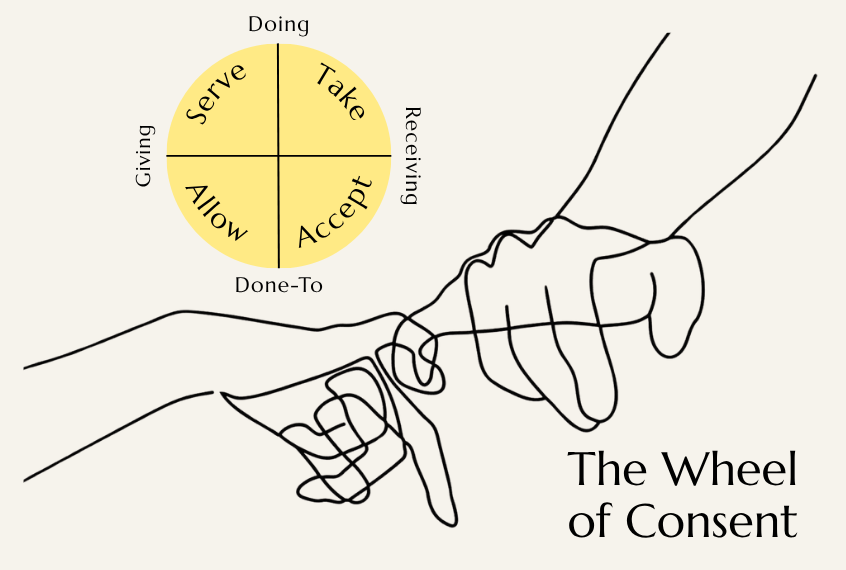
What happens when we’re out of alignment? When it isn’t clear what someone wants, who something is for, or if you’ve really consented to the thing itself?
Maybe you find yourself simply tolerating behaviors, falling into unhealthy patterns (people-pleasing, passive aggression, etc), or often feeling taken advantage of. When we’re out of alignment, agreement, and active consent, the “shadow” is at play.
This can affect what’s happening in our bodies, our personal relationships, and how we show up in the world.
In this practice, we’ll unpack what the “shadow side” looks like, where it shows up in our lives, and how it impacts society at large. Together, we’ll learn how practicing the Wheel of Consent can help us into agreement, harmony, and virtuosity with ourselves and others.
Betty Martin’s Wheel of Consent provides us with the tools and practices to get truly comfortable advocating for ourselves, setting boundaries, expressing our wants and needs, and accepting them fully when they come to us.
With hands-on activities to help us get out of our comfort zones and into our feeling-sense, we’ll move into the world more in-tune, more embodied, and more confident in our ability to ask for what we want, speak up for what we don’t, and get more of what we hope for.
This practice is in collaboration with Temple New York, and takes place at their lovely space. The button below will take you to their website to book!
Who’s facilitating?
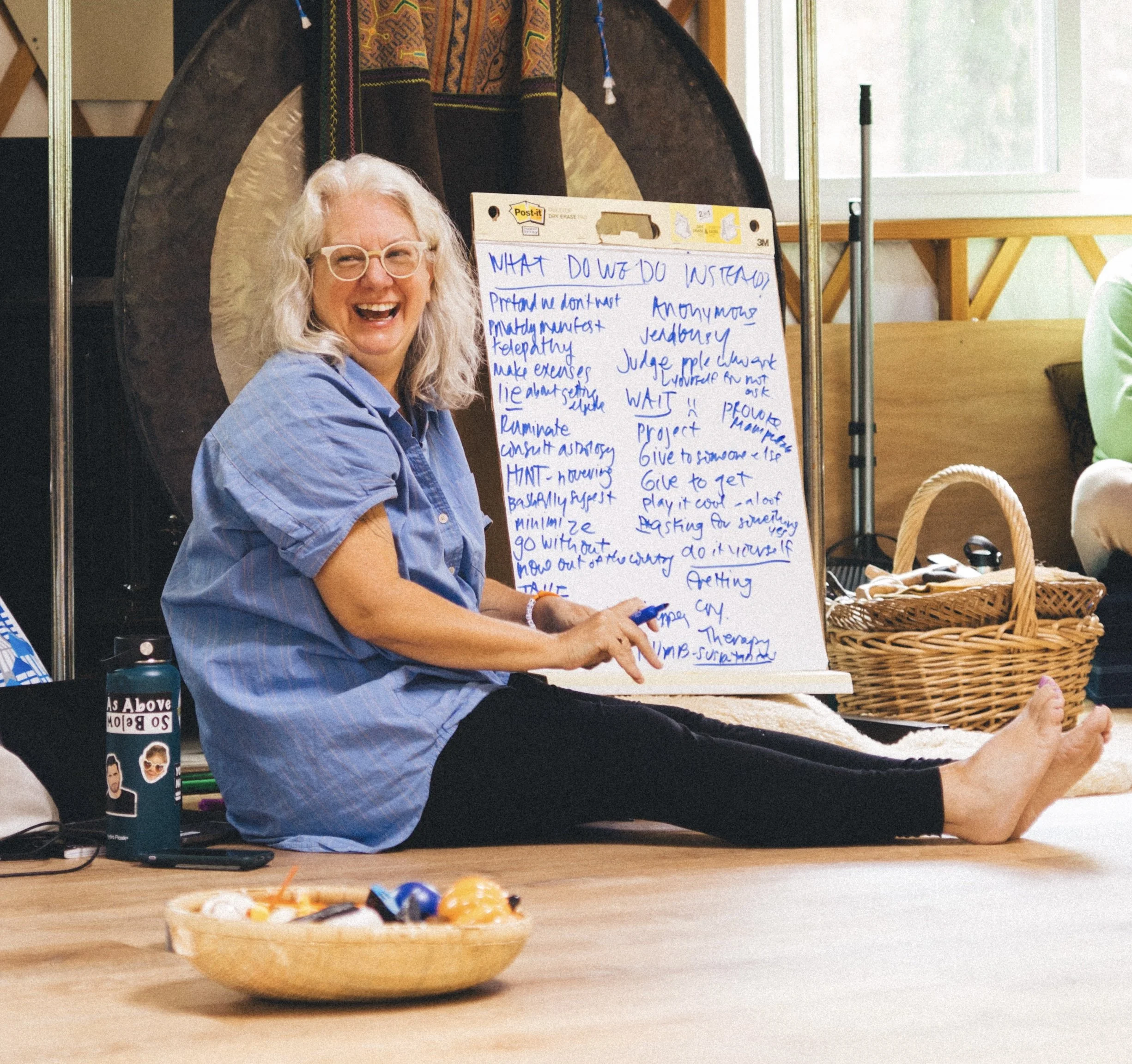
Beth Poague is a disability justice, accessibility, and inclusion educator. She is trained in restorative practices and conflict resolution, including circle-keeping, transformative mediation, and group facilitation.
Passionate about pleasure, desire, and embodied “no’s,” Beth is an active practitioner of the Wheel of Consent, and is an official Facilitator with the School of Consent. She strives for warm, inclusive, vulnerable spaces, where everyone feels cared for.
With a Master’s degree in Social Justice Educational Studies, Beth is interested in somatics and co-regulation, neurodivergence and trauma, healing and connection, abolition, and collective care.